USENIX Security '23 - PET: Prevent Discovered Errors from Being Triggered in the Linux Kerne
USENIX Security '23 - ZBCAN: A Zero-Byte CAN Defense System
USENIX Security '23 - The Space of Adversarial Strategies
USENIX Security '23 - DAFL: Directed Grey-box Fuzzing guided by Data Dependency
USENIX Security '23 - Speculation at Fault: Modeling and Testing Microarchitectural Leakage of...
USENIX Security '23 - Three Lessons From Threema: Analysis of a Secure Messenger
USENIX Security '23 - Beyond Typosquatting: An In-depth Look at Package Confusion
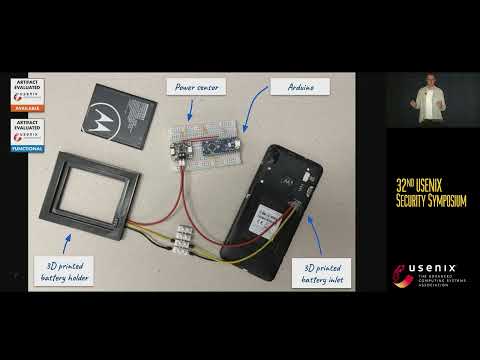
USENIX Security '23 - Powering Privacy: On the Energy Demand and Feasibility of Anonymity...
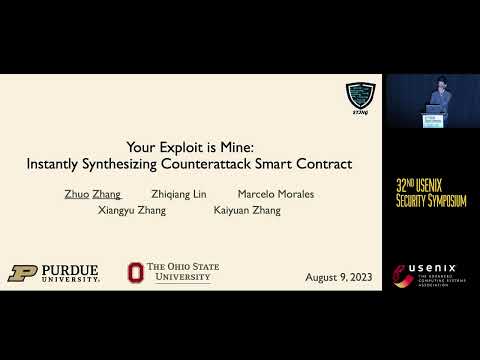
USENIX Security '23 - Your Exploit is Mine: Instantly Synthesizing Counterattack Smart Contract
USENIX Security '23 - “Millions of people are watching you”: Understanding the Digital-Safety...
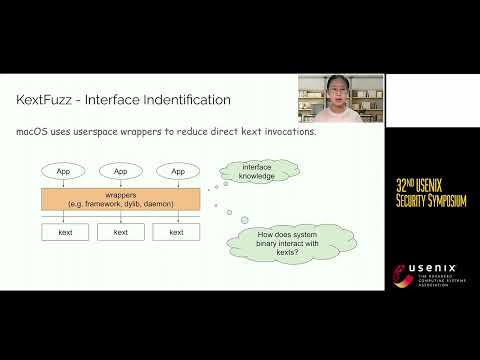
USENIX Security '23 - KextFuzz: Fuzzing macOS Kernel EXTensions on Apple Silicon via Exploiting...
USENIX Security '23 - A Two-Decade Retrospective Analysis of a University's Vulnerability to...
USENIX Security '23 - The Most Dangerous Codec in the World: Finding and Exploiting...
USENIX Security '23 - Cipherfix: Mitigating Ciphertext Side-Channel Attacks in Software
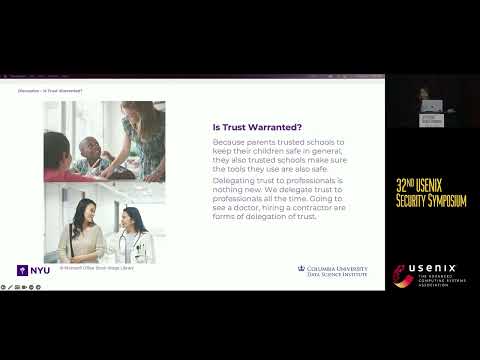
USENIX Security '23 - "I'm going to trust this until it burns me" Parents' Privacy Concerns and...
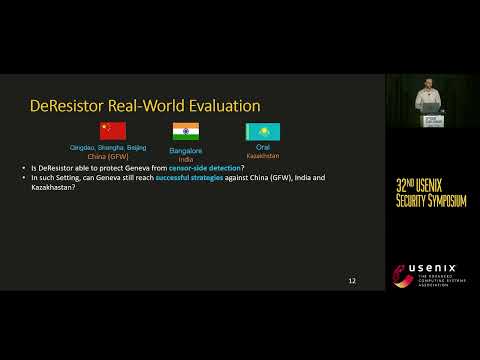
USENIX Security '23 - DeResistor: Toward Detection-Resistant Probing for Evasion of Internet...
USENIX Security '23 - How Library IT Staff Navigate Privacy and Security Challenges and...
USENIX Security '23 - An Input-Agnostic Hierarchical Deep Learning Framework for Traffic...
USENIX Security '23 - Automated Security Analysis of Exposure Notification Systems
USENIX Security '23 - Adversarial Training for Raw-Binary Malware Classifiers