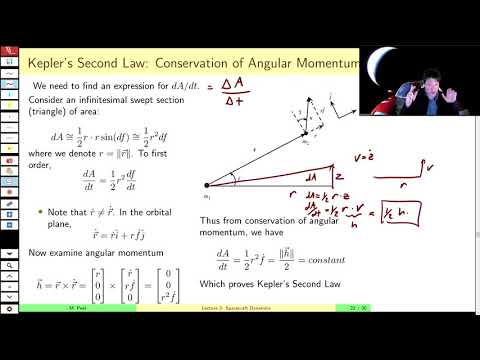
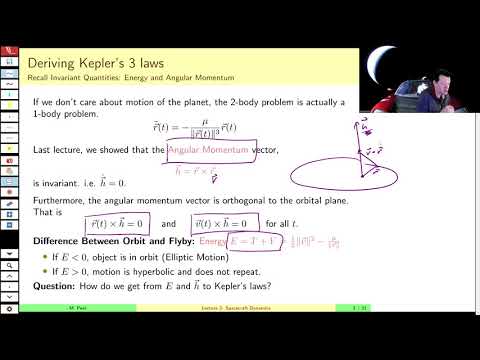
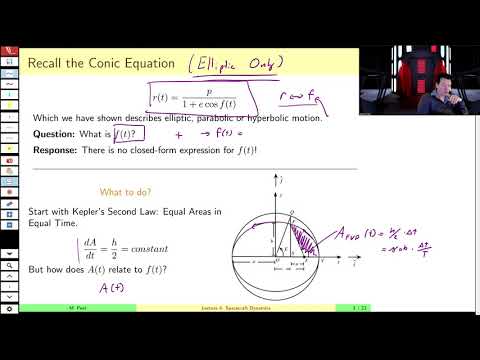
AEE462 Lecture 3, Part C - Proving Kepler's 2nd and 3rd Law and Turning Angle for Hyperbolic Orbits
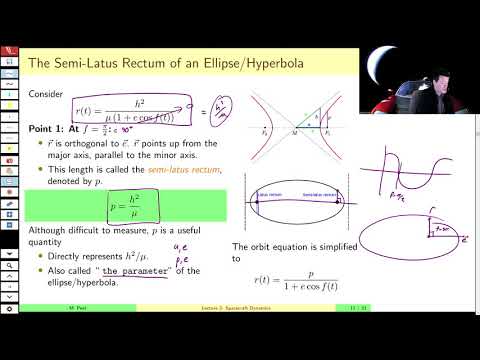
AEE462 Lecture 3, Part B - Parameters of Elliptic and Hyperbolic Motion
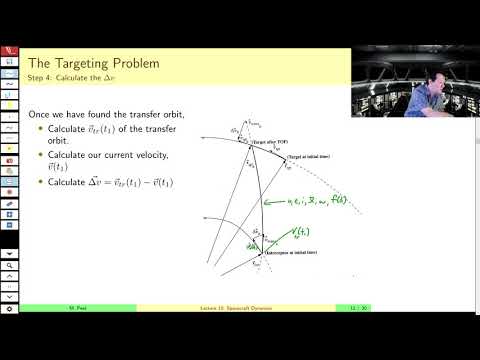
AEE462 Lecture 10, Part C - A Bisection Algorithm for the Solution of Lambert's Equation
AEE462 Lecture 3, Part A - The Eccentricity Vector and the Polar Equation
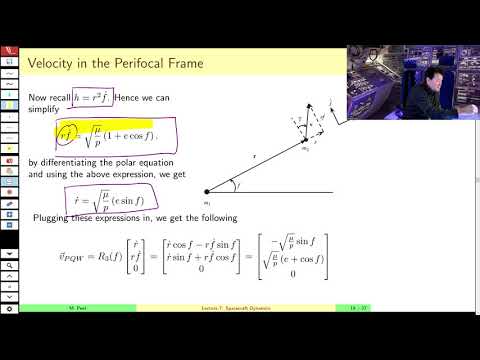
AEE462 Lecture 7, Part C - Using Orbital Elements to Find Position and Velocity Vectors
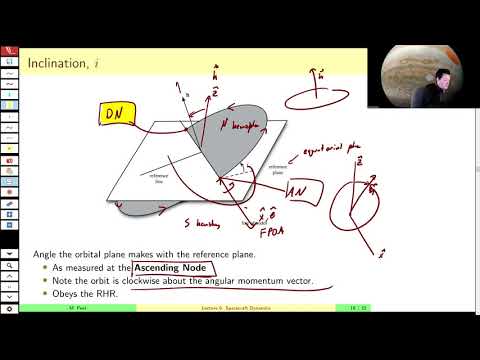
AEE462 Lecture 6, Part B (rev 1) - 3D Orbital Elements: Inclination, RAAN, and Argument of Periapse
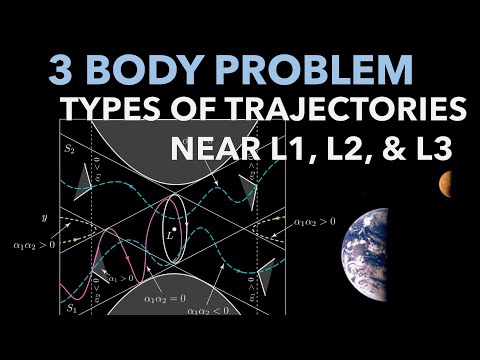
Trajectory Types Near L1, L2, & L3 in the Three Body Problem - Theory and MATLAB Examples | Topic 11
AEE462 Lecture 1, Part C - Orbits and the Scientific Revolution
AEE462 Lecture 10, Part B - Lambert's Equation and the Solution to Lambert's Problem
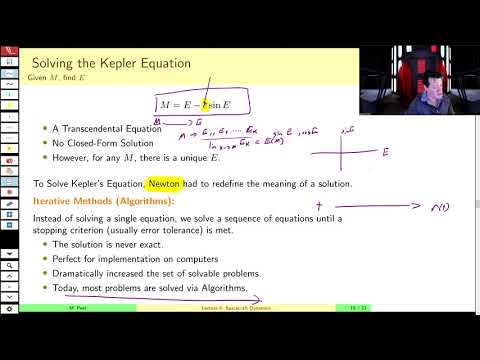
AEE462 Lecture 4, Part B - Newton-Raphson Iteration and Kepler's Equation
An Elementary Derivation of Kepler's Laws of Planetary Motion, Part 3
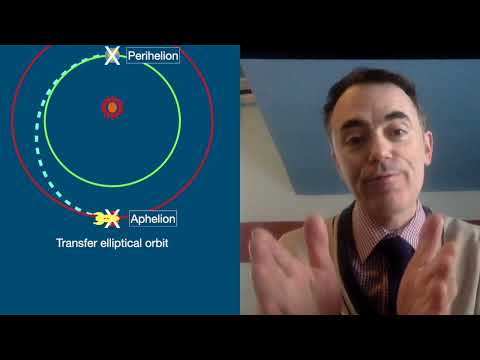
Slingshot and transfer orbits
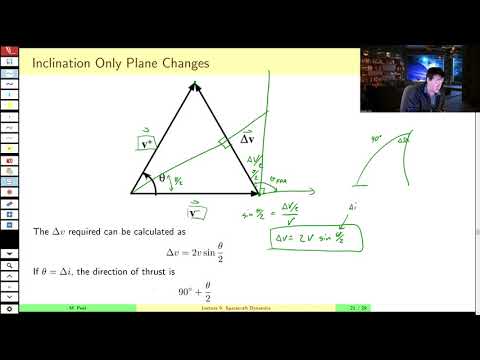
AEE462 Lecture 9, Part D - Orbital Plane-Change Maneuvers
Periodic orbits in Rössler system
AEE462 Lecture 4, Part A - Moving Elliptic Orbits in Time
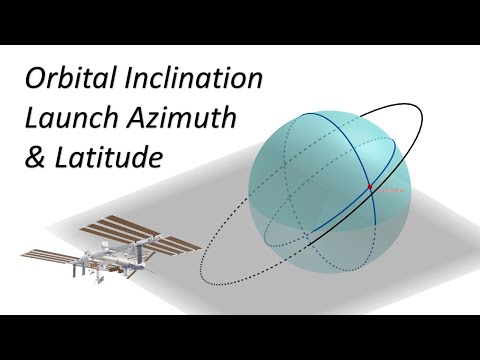
Orbit Inclination, Launch Azimuth and Latitude
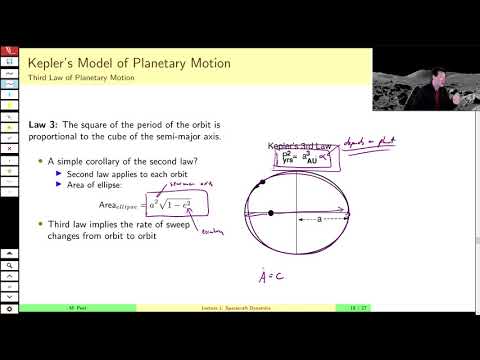
AEE462 Lecture 1, Part D - Kepler's 3 Laws of Planetary motion and Newton's Universal Gravitation
An Elementary Derivation of Kepler's Laws of Planetary Motion, Part 2
LSN 9 - Transforming a Position Vector and a Velocity Vector into the 6 Classical Orbital Elements
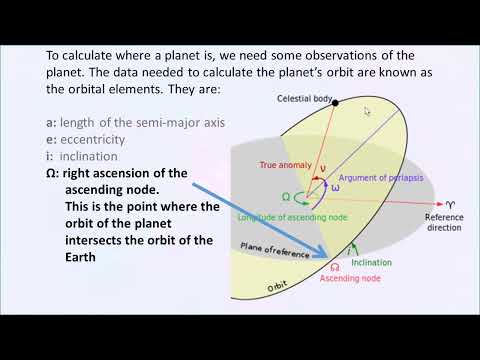
Orbits Of Planets, Part 2: Orbital Elements