72. OCR A Level (H046-H446) SLR13 - 1.4 Primitive data types
73. OCR A Level (H046-H446) SLR13 - 1.4 Binary positive integers
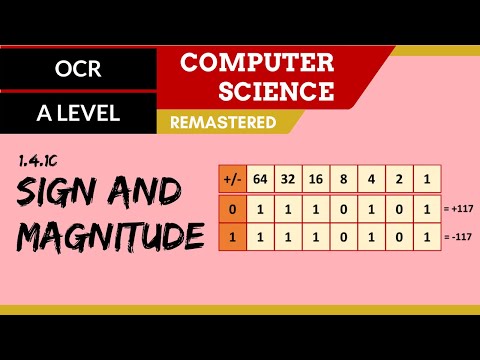
74. OCR A Level (H046-H446) SLR13 - 1.4 Sign and magnitude
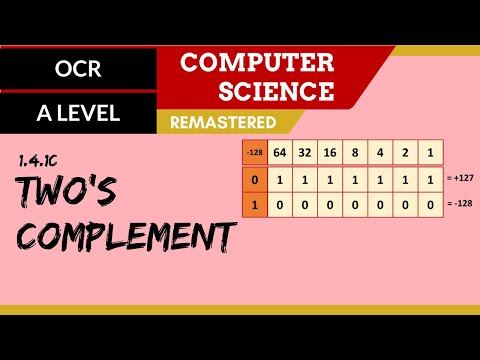
75. OCR A Level (H046-H446) SLR13 - 1.4 Two's complement
79. OCR A Level (H046-H446) SLR13 - 1.4 Floating point binary part 1 - Overview
84. OCR A Level (H046-H446) SLR13 - 1.4 Character sets
82. OCR A Level (H446) SLR13 - 1.4 Floating point arithmetic
76. OCR A Level (H046-H446) SLR13 - 1.4 Binary addition and subtraction
77. OCR A Level (H046-H446) SLR13 - 1.4 Hexadecimal representation
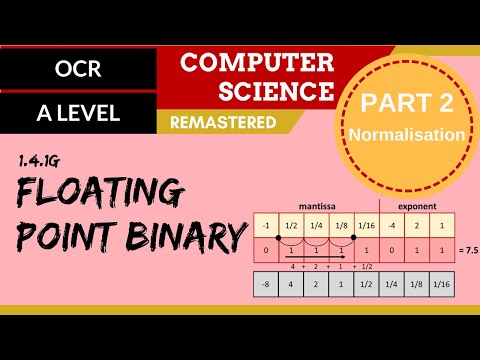
80. OCR A Level (H046-H446) SLR13 - 1.4 Floating point binary part 2 - Normalisation
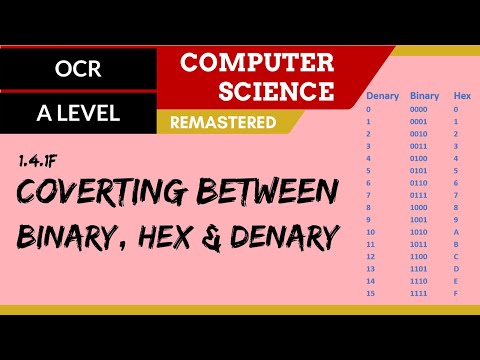
78. OCR A Level (H046-H446) SLR13 - 1.4 Converting between binary, hex & denary
139. OCR A Level (H446) SLR24 - 2.2 Features of a problem
11. OCR A Level (H046-H446) SLR3 - 1.1 RAM and ROM
46. OCR A Level (H046-H446) SLR9 - 1.3 Lossy vs lossless
127. OCR A Level (H046-H446) SLR20 - 2.1 Identify sub procedures
129. OCR A Level (H046-H446) SLR21 - 2.1 Determine logical conditions
128. OCR A Level (H046-H446) SLR21 - 2.1 Decision points in a solution
119. OCR A Level (H046-H446) SLR18 - 2.1 Devise an abstract model
44. OCR A Level (H046-H446) SLR8 - 1.2 Introduction to programming part 5 string handling
74. AQA GCSE (8525) SLR13 - 3.3 Why hexadecimal is used